description::
× Mcsh-creation: {2026-01-20}
"South Korea, officially the **Republic of Korea (ROK)**, is a dynamic and technologically advanced nation located in East Asia. It occupies the southern half of the Korean Peninsula and shares a heavily militarized border with North Korea. Known for its rich history, vibrant culture, and rapid economic growth, South Korea is a global powerhouse in technology, entertainment, and manufacturing.
---
### **Geography**
- **Location:** Eastern Asia, south of North Korea.
- **Capital:** Seoul.
- **Area:** Approximately 100,363 square kilometers.
- **Climate:** Temperate with four distinct seasons. Winters can be cold and dry, while summers are hot and humid.
- **Major Cities:** Busan, Incheon, Daegu, Daejeon, and Gwangju.
---
### **Population**
- **Population (2024):** Around 52 million.
- **Ethnicity:** Predominantly ethnically Korean.
- **Languages:** Korean (official); Hangul is the script.
- **Urbanization:** Over 80% of the population lives in urban areas.
---
### **Government**
- **Type:** Unitary presidential constitutional republic.
- **President:** Head of state and government (as of your inquiry, it may change with elections).
- **National Assembly:** The legislative body.
---
### **Economy**
- **Economic Model:** Export-driven with a focus on manufacturing and technology.
- **Currency:** South Korean Won (KRW).
- **Major Industries:**
- Technology and Electronics (Samsung, LG).
- Automotive (Hyundai, Kia).
- Shipbuilding.
- Chemicals and Steel.
- Entertainment and Media (K-pop, movies, and dramas).
- **GDP (2024):** Among the top 10 globally.
- **Trade Partners:** United States, China, Japan, and the European Union.
---
### **Culture**
- **Traditional Heritage:**
- Influences from Confucianism, Buddhism, and ancient Korean dynasties.
- Traditional clothing: **Hanbok**.
- Notable cuisine: **Kimchi**, **Bibimbap**, **Bulgogi**, and **Tteokbokki**.
- **Modern Influence:**
- Leader in the "Korean Wave" (Hallyu), spreading K-pop, K-dramas, and films globally.
- Major cultural festivals, such as the Boryeong Mud Festival and Busan International Film Festival.
---
### **Technology and Innovation**
- South Korea is one of the most technologically advanced countries:
- Leading in 5G technology adoption.
- Headquarters for tech giants like Samsung and LG.
- Cutting-edge developments in robotics, AI, and biotechnology.
---
### **Education**
- Highly competitive and rigorous education system.
- High literacy rates and global ranking in STEM education.
- Prestigious universities like Seoul National University, KAIST, and Yonsei University.
---
### **Tourism**
- Major Attractions:
- Historical sites: Gyeongbokgung Palace, Bulguksa Temple.
- Natural beauty: Jeju Island, Seoraksan National Park.
- Modern landmarks: N Seoul Tower, Lotte World Tower.
- A blend of ancient traditions and modernity attracts millions of tourists yearly.
---
### **Challenges**
- **Geopolitical Tensions:** Persistent tensions with North Korea.
- **Aging Population:** Declining birth rates and a rapidly aging population.
- **Economic Inequality:** Disparities between large corporations and smaller businesses.
---
### **Key Facts**
- South Korea transformed from a war-torn nation after the Korean War (1950–1953) into a global economic leader within a few decades.
- A hub for global pop culture and technological innovation.
- Ranked as one of the most livable and safest countries globally.
South Korea's blend of ancient traditions and modern achievements makes it a fascinating nation with significant influence in global affairs."
[{2024-12-02 retrieved} https://chatgpt.com/c/674de808-3908-8003-8d06-e24f28c8b6ee]
description::
× Mcsh-creation: {2026-01-20}
· South Korea observes a single time zone throughout the country:
Korea Standard Time (KST)
UTC/GMT +9:00
No Daylight Saving Time – South Korea does not change its clocks seasonally.
So, whether you're in Seoul, Busan, or anywhere in South Korea, the time is always KST (UTC+9).
description::
× Mcsh-creation: {2026-01-20}
· The calling code (international dialing prefix) for **South Korea** is: **+82**
---
**Key notes when calling South Korea:**
1. **From abroad:** Dial your country's international access code (often `00` or `011`), then `82`, followed by the area code (without the leading `0`) and the local number.
- Example: To call Seoul (area code `2`) from the US: `011 82 2 XXXX XXXX`
2. **Domestically:** Dial numbers with area codes (including the leading `0`), e.g., `02-XXXX-XXXX` for Seoul.
3. **Mobile numbers** usually start with `010` (e.g., `010-XXXX-XXXX`). When dialing from abroad, use `+82 10 XXXX XXXX` (omitting the leading `0`).
description::
× Mcsh-creation: {2026-01-20}
"South Korea offers a dynamic mix of ancient traditions, cutting-edge modernity, stunning natural landscapes, and vibrant pop culture. Here’s a curated list of top attractions, categorized for easier planning:
### **Seoul & Metropolitan Area**
1. **Gyeongbokgung Palace** (Seoul): The largest and most iconic of Seoul's Five Grand Palaces. Don't miss the changing of the guard ceremony and rent a hanbok (traditional dress) for photos.
2. **Bukchon Hanok Village** (Seoul): A picturesque neighborhood between Gyeongbokgung and Changdeokgung, filled with traditional Korean houses (*hanok*). Perfect for a scenic stroll.
3. **Changdeokgung Palace & Huwon** (Seoul): A UNESCO World Heritage site famous for its "Secret Garden" (Huwon), a beautifully landscaped rear garden that blends with the natural topography.
4. **N Seoul Tower** (Namsan Tower): Offers panoramic views of the sprawling city. A symbol of Seoul, popular for its "Locks of Love" fence.
5. **Myeongdong**: The epicenter of shopping, street food, and beauty products. A bustling, neon-lit district that's especially vibrant at night.
6. **Hongdae**: Centered around Hongik University, known for its indie music scene, quirky cafes, street performances, youthful fashion, and vibrant nightlife.
7. **Insadong**: The go-to area for traditional Korean crafts, tea houses, art galleries, and souvenirs. Visit **Ssamziegil**, a unique multi-story shopping complex.
8. **DMZ (Demilitarized Zone)**: A day trip from Seoul offering a sobering look at the division of the Korean Peninsula. Tours often include the **JSA (Joint Security Area)**, infiltration tunnels, and the Dora Observatory.
### **Historical & Cultural Cities**
9. **Gyeongju**: Often called "the museum without walls," this ancient capital of the Silla Kingdom is filled with UNESCO sites like **Bulguksa Temple**, **Seokguram Grotto**, and the **Daereungwon Tomb Complex** (with Cheonmachong Tomb).
10. **Jeonju Hanok Village**: One of Korea's largest traditional villages, famous for its well-preserved *hanok* houses, delicious **bibimbap**, and traditional culture experiences.
11. **Andong Hahoe Folk Village**: A UNESCO-listed village known for its preserved Joseon-era architecture, traditional masks (*Hahoe Tal*), and the Mask Dance Festival.
12. **Suwon Hwaseong Fortress**: A magnificent UNESCO-listed late-18th-century walled fortress surrounding the city center. You can walk along the impressive walls and gates.
### **Natural Wonders & Scenic Spots**
13. **Jeju Island** (Jeju-do): A volcanic island and holiday paradise. Must-sees include:
* **Hallasan Mountain** (South Korea's highest peak)
* **Seongsan Ilchulbong** (Sunrise Peak)
* **Manjanggul Cave** (lava tube)
* **Jeju's Waterfalls** (Cheonjiyeon, Jeongbang)
* **Unique lava coastlines** like Jusangjeolli Cliff
14. **Seoraksan National Park** (Sokcho): Korea's most famous mountain park, renowned for its dramatic rocky peaks, dense forests, and clear streams. Great for hiking in all seasons.
15. **Busan's Beaches**: **Haeundae Beach** is the most famous for its vibrancy and summer festivals, while **Gwangalli Beach** offers stunning views of the Gwangan Bridge.
16. **Suncheon Bay Wetland Reserve**: Home to the largest reed bed in Korea and a crucial stop for migratory birds. The panoramic view from the observatory is breathtaking.
17. **Jirisan National Park**: The largest national park on the mainland, offering some of Korea's most challenging and rewarding hikes.
### **Modern & Pop Culture**
18. **Starfield Library** (Seoul - COEX Mall): A stunning two-story public library filled with towering bookshelves, a paradise for photos.
19. **Dongdaemun Design Plaza (DDP)** (Seoul): A futuristic neofuturistic landmark designed by Zaha Hadid, hosting exhibitions, fashion shows, and events.
20. **Lotte World Tower & Seoul Sky** (Seoul): The tallest building in Korea with the world's highest glass-bottom observation deck.
21. **Busan's Gamcheon Culture Village**: A hillside "Lego-like" village of colorful houses, transformed into a vibrant arts community with murals, cafes, and art installations.
22. **K-Pop Experiences**: Visit entertainment company buildings (like SMTOWN COEX Artium), themed cafes, or attend a live music show (**M Countdown**, **KBS Open Concert**).
### **Food & Markets**
23. **Gwangjang Market** (Seoul): One of the oldest and largest traditional markets, legendary for its food alley offering *bindaetteok* (mung bean pancakes), *mayak gimbap*, and more.
24. **Jagalchi Fish Market** (Busan): Korea's largest seafood market where you can buy fresh seafood and have it prepared on the spot at upstairs restaurants.
25. **Noryangjin Fisheries Wholesale Market** (Seoul): A massive, immersive 24-hour seafood market experience.
### **Tips for Travelers:**
* **Transport**: Get a **T-money card** for easy travel on subways and buses in cities. The KTX high-speed train is excellent for intercity travel.
* **Connectivity**: Rent a portable Wi-Fi egg or purchase a SIM card upon arrival at the airport.
* **Apps**: Use **Naver Maps** or **KakaoMap** (more accurate than Google Maps in Korea), and **KakaoTaxi** for transportation.
* **Seasons**: Spring (cherry blossoms) and Autumn (foliage) are stunning but crowded. Summer is hot and humid with monsoon rains. Winter is cold and dry, great for skiing.
This list just scratches the surface! South Korea is a country where you can explore a serene Buddhist temple in the morning and attend a high-energy K-Pop concert in the evening. Enjoy your trip (**여행 잘 다녀오세요!**)"
[{2026-01-21 retrieved} https://chat.deepseek.com/a/chat/s/867d14b0-bff3-4863-b3b2-1ffc7fd22353]
description::
× Mcsh-creation: {2026-01-20}
"I’ll give a clear snapshot of South Korea’s economy (size, growth, inflation, jobs), what it’s driven by (exports, tech/ships/cars), key risks (China demand, demographics, debt), and near-term outlook—using fresh web data and citations.
I’ve pulled the freshest official forecasts (Bank of Korea) and recent export data (MOTIE), plus labor-market stats (OECD). Next I’ll add a quick “what drives Korea” breakdown and key risks/outlook, and include a small image carousel for context.
[](https://www.pinterest.com/pin/380061656037878143/?utm_source=chatgpt.com)
South Korea is a high-income, export-driven economy with a big advanced-manufacturing base (chips, autos, shipbuilding) and a large services sector.
### Quick snapshot (latest widely cited official/institutional figures)
* **Economic size:** **~$1.88T GDP (2024)** (World Bank). ([World Bank Open Data][1])
IMF’s WEO database shows **~$1.94T GDP (2025)**. ([IMF][2])
* **Income level:** **GDP per capita (PPP) ~ $58.9k (2024)** (World Bank). ([World Bank Open Data][3])
* **Growth outlook:** Bank of Korea projects **~1.0% growth in 2025** and **~1.8% in 2026**. ([bok.or.kr][4])
* **Inflation outlook:** Bank of Korea forecasts **CPI inflation ~2.1% in both 2025 and 2026**. ([bok.or.kr][4])
* **Jobs:** Unemployment has stayed low—**~2.7% (May 2025)** per OECD. ([OECD][5])
### What drives South Korea’s economy
* **Exports are the engine.** In **2025, exports hit a record $709.7B (+3.8% YoY)**, topping **$700B** for the first time; imports were **$631.7B** and the **trade surplus was $78.0B** (MOTIE). ([english.motir.go.kr][6])
* **Semiconductors are the centerpiece:** **$173.4B in chip exports in 2025 (+22.2%)** (MOTIE), heavily linked to AI/data-center demand and memory prices. ([english.motir.go.kr][6])
* Other key export pillars in 2025 (MOTIE): **autos $72.0B**, **ships $32.0B**, plus growth in areas like bio-health, electronics/ICT, and consumer exports (e.g., cosmetics). ([english.motir.go.kr][6])
* Recent monthly detail (Nov 2025): exports **$61.0B (+8.4% YoY)**; **semiconductors $17.3B (+38.6%)** (monthly record), **autos $6.4B (+13.7%)**. ([english.motir.go.kr][7])
### Current issues to watch
* **Domestic demand softness:** Late 2025 saw **very weak Q4 growth** in estimates/polls, with construction and consumption dragging even as exports held up. ([Reuters][8])
* **Trade/geopolitics sensitivity:** Korea’s outlook is highly exposed to global tech cycles and trade policy (e.g., U.S. tariff discussions around chips). ([Reuters][9])
* **Monetary-policy constraints:** The Bank of Korea has emphasized financial/FX stability (it held the policy rate at **2.50%** in early 2026 per Reuters). ([Reuters][10])
### Near-term outlook (plain-English)
If the **semiconductor upcycle** stays strong, it can keep exports and investment supportive; the main swing factor is whether **domestic demand** (construction/households) rebounds enough to complement exports—pretty much exactly what the Bank of Korea is baking into its **2025–26** forecasts. ([bok.or.kr][4])
[1]: https://data.worldbank.org/indicator/NY.GDP.MKTP.CD?locations=KR&utm_source=chatgpt.com "GDP (current US$) - Korea, Rep."
[2]: https://www.imf.org/external/datamapper/NGDPD%40WEO/WEOWORLD/KOR?utm_source=chatgpt.com "World Economic Outlook (October 2025) - GDP, current ..."
[3]: https://data.worldbank.org/indicator/NY.GDP.PCAP.PP.CD?utm_source=chatgpt.com "GDP per capita, PPP (current international $)"
[4]: https://www.bok.or.kr/eng/bbs/E0000634/view.do?menuNo=400069&nttId=10094798 "Economic Outlook (November 2025) | (상세) | Bank of Korea"
[5]: https://www.oecd.org/en/publications/2025/07/oecd-employment-outlook-2025-country-notes_5f33b4c5/korea-republic-of_3f6a1ffe.html?utm_source=chatgpt.com "OECD Employment Outlook 2025: Korea"
[6]: https://english.motir.go.kr/eng/13/topics/2?pageIndex=3 "Trade/Investment < TOPICS - Ministry of Trade, industry and Energy
[7]: https://english.motir.go.kr/eng/article/EATCLdfa319ada/2433/view "Press Releases < PRESS CENTER - Ministry of Trade, industry and Energy
[8]: https://www.reuters.com/world/asia-pacific/south-korean-economy-hardly-grew-q4-domestic-demand-weakened-2026-01-20/?utm_source=chatgpt.com "South Korean economy hardly grew in Q4 as domestic demand weakened: Reuters poll"
[9]: https://www.reuters.com/world/asia-pacific/south-koreas-lee-plays-down-proposed-us-chip-tariffs-warns-higher-prices-2026-01-21/?utm_source=chatgpt.com "South Korea's Lee plays down proposed US chip tariffs, warns of higher prices"
[10]: https://www.reuters.com/world/asia-pacific/south-koreas-central-bank-holds-rates-safeguard-financial-stability-2026-01-15/?utm_source=chatgpt.com "Bank of Korea signals end to easing cycle after standing pat to safeguard FX stability""
[{2026-01-21 retrieved} https://chatgpt.com/c/6970939a-84e8-832c-b699-7c965a5af4fe]
description::
× Mcsh-creation: {2025-03-16}
· KRW = currency of South-Korea.
· exchange-rate EUR to KRW:
· 1 EUR (€) = KRW
· Rates By Exchange Rate API · EUR:
· KRW:
"## South Korea's Currency
**Official Currency:** **South Korean Won (char.8361'₩' / KRW)**
### 💰 Banknotes & Coins
**Banknotes (Most Common):**
* **₩50,000** - Yellow, features **Shin Saimdang** (artist/mother of a scholar)
* **₩10,000** - Green, features **King Sejong the Great** (creator of Hangeul)
* **₩5,000** - Red/Brown, features **Yulgok Yi I** (scholar)
* **₩1,000** - Blue, features **Toegye Yi Hwang** (scholar)
**Coins (Most Common):**
* **₩500** - Silver, features the Red-Crowned Crane
* **₩100** - Silver, features **Admiral Yi Sun-sin**
* **₩50** - Brass, features a rice plant (less common)
* **₩10** - Bronze, features **Dabotap Pagoda** (rarely used)
* **₩1-₩5** - Practically out of circulation
---
## 💵 **Practical Money Information for Travelers**
### **1. Cash vs. Cards**
* **Cards (Extremely Common):** South Korea is a largely **cashless society**. Credit/debit cards (Visa, Mastercard) are accepted almost everywhere, including in taxis and small market stalls.
* **Cash (Still Useful):** Needed for traditional markets, street food stalls, bus fare in rural areas, and reloading transportation cards. Always keep some cash on hand.
### **2. Exchange Money**
* **Best Rates:** Usually at **banks** or authorized currency exchange counters.
* **Good Convenience:** **Incheon Airport** arrivals hall (rates are decent).
* **Avoid:** Exchanging at hotels (poor rates).
* **Tip:** Bring USD, EUR, or other major currencies in **clean, undamaged bills** (old or torn notes may be rejected).
### **3. ATMs**
* **Global ATMs:** Look for ATMs at convenience stores (**7-Eleven, CU, GS25**), airports, and subway stations that have stickers saying **"Global ATM"** or **"Foreign Card OK."**
* **Bank ATMs:** Many are 24/7. They have an English language option.
* **Fees:** You will likely incur a fee from both the Korean ATM provider and your home bank.
### **4. Transportation Card (Use Like Cash)**
* **T-money or Cashbee Card:** Purchase at convenience stores, subway stations, or airports.
* **Use:** Tap on/off for **subways and buses** (Seoul & nationwide). Can also be used to pay in **taxis and convenience stores**.
* **Top-up:** Reload with cash at machines in subway stations or at convenience store counters.
---
## 💳 **Important Payment Notes for Foreigners**
✔️ **Cards:** Contactless payments (tap) are widespread. Chip-and-PIN is standard.
⚠️ **Foreign Cards:** Some smaller restaurants, cafes, or online shopping sites (especially booking tickets) may **only accept domestic Korean cards**. Always have a backup payment method.
✔️ **Digital Payments:** **KakaoPay** and **Naver Pay** are dominant, but they usually require a Korean bank account/cell phone to set up.
💰 **Tipping:** **Not a custom** in South Korea. It's not expected at restaurants, in taxis, or by hotel staff. A service charge is often included.
---
## 💱 **Approximate Exchange Rates (for reference)**
* **1 USD ≈ 1,350 - 1,400 KRW**
* **1 EUR ≈ 1,450 - 1,550 KRW**
* **100 JPY ≈ 900 - 1,000 KRW**
*(Rates fluctuate, always check a reliable source like **XE.com** before your trip.)*
---
## 📱 **Useful Financial Apps for Travelers**
* **XE Currency:** For live exchange rates.
* **Naver Pay / KakaoPay:** To understand the local payment ecosystem (though setting up is difficult for short-term visitors).
* **Your Bank's App:** To monitor withdrawals and card transactions.
**Pro Tip:** Notify your bank of your travel dates to avoid having your card blocked for "suspicious foreign activity."
Enjoy your trip to South Korea! (**한국 여행 재미있게 즐기세요!**)"
[{2026-01-21 retrieved} https://chat.deepseek.com/a/chat/s/867d14b0-bff3-4863-b3b2-1ffc7fd22353]
description::
× Mcsh-creation: {2026-01-26}
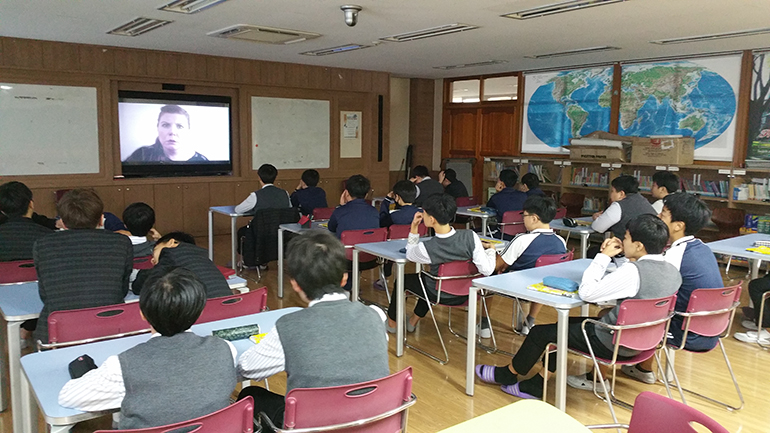
"Here’s a clear, big-picture look at **the education sector of South Korea** 🇰🇷—it’s one of the most intense and high-performing systems in the world.


---
## 🎓 Overview
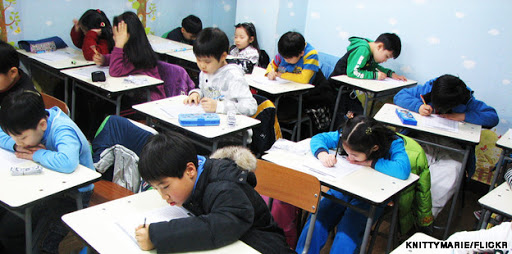
The education sector in **South Korea** is **highly centralized, competitive, and exam-driven**. Education is seen as the main path to social mobility, career success, and family honor.
---
## 🏫 Structure of the Education System
### 1. Early Childhood Education
* Kindergarten (ages 3–5)
* Not compulsory, but very common
### 2. Primary Education
* Ages 6–12 (Grades 1–6)
* **Compulsory**
* Strong focus on discipline, math, Korean language, and ethics
### 3. Secondary Education
* **Middle School**: Ages 12–15 (Compulsory)
* **High School**: Ages 15–18 (General, vocational, or specialized)
* Heavy academic pressure starts here
### 4. Higher Education
* Universities, colleges, and technical institutes
* Top universities are extremely selective
* Strong emphasis on STEM, engineering, and business
---
## 📚 The Exam Culture (Big Deal)
### 🔥 CSAT (College Scholastic Ability Test)
* Known as **Suneung**
* A single national exam that largely determines university admission
* On exam day:
* Flights are grounded during listening tests
* Stock market opens late
* Police escort late students
This exam shapes **students’ entire teenage life**.
---
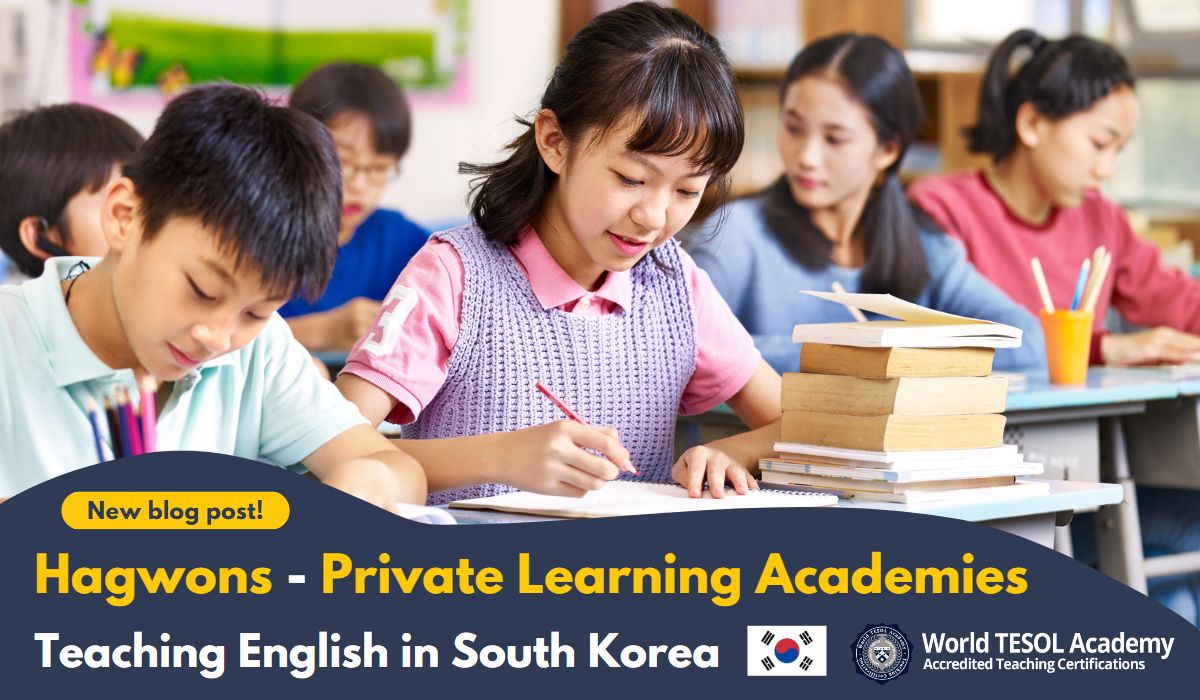
## 🏢 Hagwons (Private Academies)
* After-school private tutoring centers
* Attended by a **majority of students**
* Families spend significant income on them
* Reinforces inequality between socioeconomic groups
---
## 🏛️ Governance & Policy
* Controlled by the **Ministry of Education of South Korea**
* National curriculum
* Teachers are highly trained and respected
* Public education quality is generally very high
---
## 🌍 Strengths
✅ Top global rankings in math, science, and reading
✅ Highly literate population
✅ Strong work ethic and discipline
✅ Excellent STEM outcomes
---
## ⚠️ Challenges
❌ Extreme academic pressure and stress
❌ High youth anxiety and burnout
❌ Overreliance on exams
❌ Expensive private education market
❌ Less emphasis on creativity and soft skills (though this is changing)
---
## 🔄 Recent Reforms & Trends
* More focus on:
* Creativity & critical thinking
* Digital education
* AI and coding
* Attempts to reduce hagwon dependence
* Mental health awareness in schools
---
## 🧠 Fun Fact
South Korea consistently ranks among the **top PISA performers**, but also among the countries where students report **the highest stress levels**.
---
If you want, I can:
* Compare South Korea’s education system with **Finland / Japan / Greece**
* Focus only on **universities**
* Analyze **why it produces top engineers**
* Explain **how pressure affects mental health**
Just tell me 👀"
[{2026-01-26 retrieved} https://chatgpt.com/c/69778c1f-82c0-8388-9b7c-0275b4bc7444]
description::
× Mcsh-creation: {2026-01-20}
"The evolution of South Korea (officially the Republic of Korea) is a remarkable story of rapid transformation from a war-torn, agrarian society into a global economic, technological, and cultural powerhouse. Here is a concise overview of its key phases:
### **1. Pre-Modern Era & Japanese Colonization (Pre-1945)**
- **Ancient & Joseon Dynasties:** Korea had a long history as a unified kingdom, with the Joseon Dynasty (1392–1897) emphasizing Confucianism, scholarship, and a rigid class system.
- **Japanese Colonization (1910–1945):** Korea was annexed by Japan, suffering cultural suppression, exploitation, and forced labor. This period left deep scars but also spurred nationalist movements.
### **2. Liberation, Division, and War (1945–1953)**
- **1945:** Liberated from Japan after WWII, but divided along the 38th parallel by U.S. and Soviet occupation.
- **1948:** Establishment of two separate states: the **Republic of Korea (South)** under Syngman Rhee (pro-U.S., capitalist) and the **Democratic People’s Republic of Korea (North)** under Kim Il-sung (pro-Soviet, communist).
- **Korean War (1950–1953):** A devastating conflict that ended in an armistice, solidifying the division and leaving the peninsula in ruins. South Korea was one of the world’s poorest nations.
### **3. Authoritarian Rule and Economic Takeoff (1960s–1980s)**
- **Park Chung-hee’s Coup (1961):** Seized power and initiated state-led industrialization.
- **Economic Miracle:** Through **Five-Year Plans**, export-oriented policies (chaebols like Samsung, Hyundai), and heavy investment in infrastructure and education, South Korea achieved explosive growth (the "Miracle on the Han River").
- **Political Repression:** Park’s rule (and later Chun Doo-hwan’s) was authoritarian, suppressing dissent (e.g., Gwangju Uprising 1980) but maintaining stability for economic growth.
- **1988 Seoul Olympics:** Symbolized South Korea’s arrival on the global stage.
### **4. Democratization and Globalization (1987–2000s)**
- **June 1987 Democratic Uprising:** Forced the government to hold direct presidential elections, leading to the **democratization** of South Korea.
- **First Civilian President (1993):** Kim Young-sam’s government launched anti-corruption drives and further economic liberalization.
- **1997 Asian Financial Crisis:** Hit South Korea hard, leading to IMF bailout and structural reforms that increased transparency and flexibility.
- **Sunshine Policy (1998–2008):** Presidents Kim Dae-jung and Roh Moo-hyun pursued engagement with North Korea, culminating in the 2000 inter-Korean summit.
### **5. 21st Century: Advanced Democracy & Global Influence**
- **Economic Powerhouse:** Became the world’s **10th–12th largest economy**, a leader in semiconductors, electronics, automobiles, shipbuilding, and pop culture.
- **Cultural Wave (Hallyu):** K-pop (BTS, BLACKPINK), K-dramas, and films gained massive global popularity, shaping global trends.
- **Political Maturation:** Peaceful transfers of power, though often with controversies (e.g., impeachment of Park Geun-hye in 2017).
- **Social Challenges:** Aging population, low birthrate (world’s lowest), income inequality, intense educational pressure, and geopolitical tensions with North Korea.
- **Technological Leadership:** Home to global tech giants (Samsung, SK Hynix) and a highly digitally connected society.
### **6. Present and Future Challenges**
- **Geopolitics:** Navigating relations with North Korea (nuclear threats), China, Japan, and the U.S.
- **Domestic Issues:** Youth unemployment, housing prices, gender inequality, and political polarization.
- **Global Role:** Aspiring to be a "Global Pivotal State," active in diplomacy, climate action, and emerging technologies.
### **Key Themes in South Korea’s Evolution:**
- **From Recipient to Donor:** Once a major aid recipient, now a significant OECD donor.
- **Compressed Development:** Achieved in decades what took centuries for many Western nations.
- **Dynamic Tension:** Between rapid change and traditional values, collective effort and individual aspiration.
South Korea’s journey is a testament to resilience, strategic planning, and the transformative power of education and innovation, making it a unique model of development in the modern world."
[{2026-01-21 retrieved} https://chat.deepseek.com/a/chat/s/59c73632-fe49-452e-b224-850162c7a6c0]
SEARCH::
· this page uses 'locator-names', names that when you find them, you find the-LOCATION of the-concept they denote.
⊛ GLOBAL-SEARCH:
· clicking on the-green-BAR of a-page you have access to the-global--locator-names of my-site.
· use the-prefix 'socKors' for senso-concepts related to current concept 'South-Korea'.
⊛ LOCAL-SEARCH:
· TYPE CTRL+F "McsLang.words-of-concept's-name", to go to the-LOCATION of the-concept.
· a-preview of the-description of a-global-name makes reading fast.
footer::
• author: Kaseluris.Nikos.1959 • email:
• edit on github: https://github.com/synagonism/dirMcsh/blob/master/dirMcsh/dirStn/McsStn000049.last.html,
• comments on Disqus,
• twitter: @synagonism,
